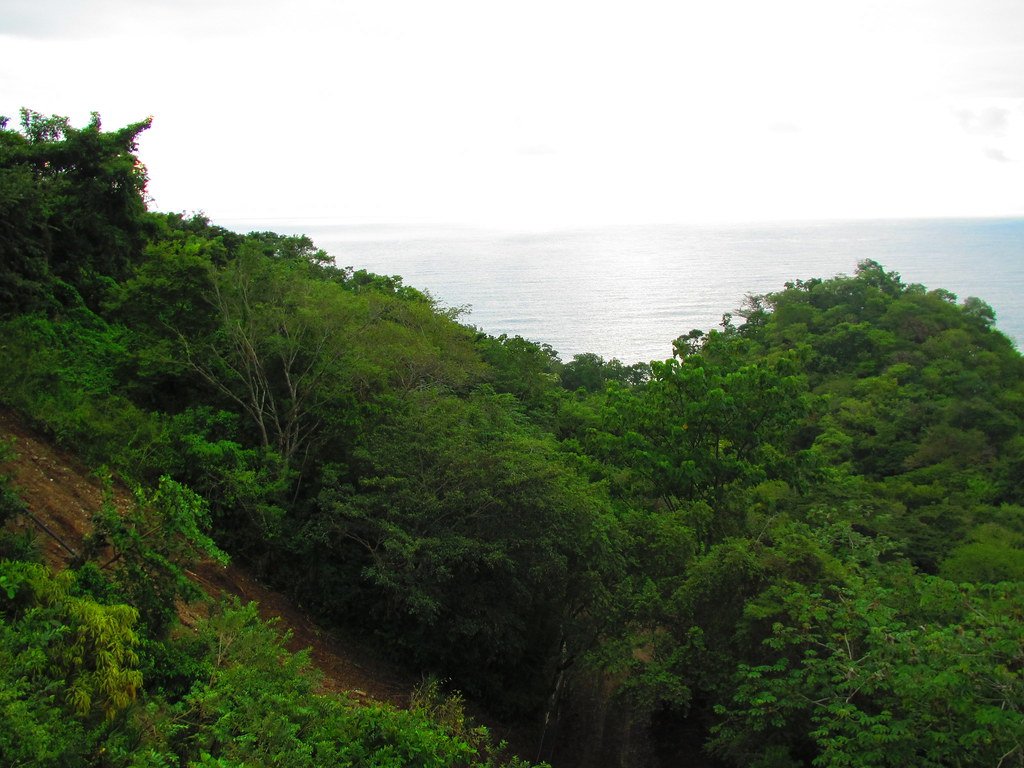
She came down from the mountains.
Traditions of storytelling are integrally linked to gatherings of commemoration, protest, and resistance
She came down from the mountains. Nobody was sure why or how, but one day she descended from the land of Chief Accerrí to the Valley. Maruca, they called her, though they weren’t sure if that was her real name. Some called her María Eugenia. If she had another name, she never told.
Her skin was brown, as was usual for people from those parts; her hair was dark, long, and silky, and she kept it neatly tied back. People say she was very quiet, reserved even, but with a hard and strong stride. “Everyone looked at her when she came in; she was a big presence wherever she was.”
It was the 1920s in so-called Costa Rica’s Itscazú, a land stolen by the Spanish centuries ago, whose Indigenous people they murdered, enslaved, and displaced, relegated to hard-to-reach areas, like jungles or the top of the mountains. Nobody knows the name of those people either. They were called Huetares by the settlers, and that’s how they are remembered now.
Maruca, seeking a way to sustain her life, found the Zúñiga Gutiérrez house. They were criollos: direct descendants of those Spanish conquistadores (conquerors) and settlers. “People of God”, “good Christians”, they let her stay and work as a maid. Many people lived in that house: El Señor, La Señora, their two daughters, five sons, and the gardener. The gardener called himself by the Spanish name Juvenal, but he also came from the mountains; his original name also lost.
Juvenal and Maruca fell in love and, in 1931, Anita was born. Born from the mountain people who lost their names, language, and culture, yet survived. Because “even when humanity has failed, we continue to birth our people.”
But things changed abruptly when Anita was only one month old and Maruca fell ill. The settler Christian family she worked for didn’t give her a break after the birth, it was indentured servitude, after all. She had to keep doing her job, going to the river to wash the clothes of ten people, among other tasks. Her “impressive image” ceased to exist. They said she got espasmos (spasms), but nobody really knows why she died.
The settler Zúñiga Gutiérrez family, good Christians as they were, took in baby Anita. They took care of her, as long as she knew her place. They gave her their last names and thus became Anita Zúñiga Gutiérrez, but she had to work for them as hard as her mother. She was now an investment, and later discovered she had been negotiated to marry another family for the longest of times. So, they fed her, but not more than their sons or daughters: one cup of coffee and one piece of bread for breakfast; whatever was left for dinner. Years later, when old-age Anita remembered those years, she called it torture; the Zúñiga Gutiérrez always called it Christian charity.
Years passed and Anita grew up thinking she was a Zúñiga Gutiérrez child. Nobody ever told her about Maruca, her past, or her relationship with Juvenal, reproducing the eliminatory violence of settler colonialism. She cooked, made everyone’s beds, and worked as an indentured maid at her own house. She grew up thinking that was the right way to become a good woman. It was only when she was older that she started questioning things, noticing how her skin was darker than her sisters’ and brothers’. It was then that she also began to escape to the mountains.
Her mother came down from the mountains. Anita liked to escape back to them.
The first time she escaped, she was 10 years old. “Me gustaba zafarme y explorar” (“I liked to break out and explore”), she remembered years later; “me sentía libre” (“I felt free”). When she came back, she got punished. They locked her in by herself and denied her any food. Yet, she continued to escape whenever she could.
One of her brothers, Hernán, helped her. Whenever she got punished and starved, he sneaked some food for her. Hernán was 20 years older and had always been kind to her. He gave her toys when she was little and defended her when things got difficult. It was also Hernán who helped Anita study. After she finished primary school, he paid for her studies as a seamstress. She still had to do her household duties, but little by little she was able to learn a craft.
Old-age Anita, decades later, reflected how she came to realize Hernán was not her brother but her real father. She remembered all his attentions and pondered how she was not born from Maruca and Juvenal the gardener, but from Hernán the criollo, son of Spanish settlers. All kept a secret, this made the Zúñiga Gutiérrez take her in, since she was their bastard daughter, and it helps explain all the duresses she had to go through.
When Anita was 14 years old, she was allowed to go to the park for one hour with her sisters. That was the social space of the moment: girls walked around the park in one direction, while boys walked in the opposite one. It was there where she met Carlos Mora. They fell in love, but her family was opposed to the relationship. Hernán didn’t like Carlos, and she was supposed to marry someone else as part the Christian family business; she was already sold. So Anita escaped one last time.
When she was 16, she ran away with Carlos and got married. She shed the Zúñiga Gutiérrez last names and became Anita Mora, the way she was known until the day she died. When she came back to the house and told them what had happened, they first tried to convince her, offering her money, inheritance, but when she didn’t relinquish, they threatened her, disavowed her, and finally came clear and told her she was adopted anyway. 16 year-old Anita was then expelled from the house where she grew up, never to return again. As Rana Barakat says, “stolen land, fragmentation of our homelands, displacement, dispossession, and captivity is the bloody contemporary manifestation of centuries of horror in geographies across the globe.”
Anita, then, renounced everything and moved in with Carlos. He used to work the fields at the banana plantations in the Caribbean coast, but was now a baker. Together they built a house and had 9 children: Carlos Miguel, Luis Alberto, Ana Lorena, Guillermo Martín, Luis Ángel, María de los Ángeles, Hernán José, María Eugenia y Fernando Martín. They also lost 9 others to poverty. Poverty that also affected her health, after years of enduring, because settler colonialism is “a dark and brutal example of the violence of European modernity on the land and on our bodies.”
When she became too frail, her eldest daughter, Ana Lorena, became her assistant and helper.
Years later, Hernán (Anita still thinking he was her brother), got into trouble and ended up in prison. Anita’s health was too weak to visit, so she sent Lorena, her helper. Every time Lorena took the bus from their village in Itskazú, on the outskirts of the Central Valley, to the capital and visited who she thought was her uncle, not knowing it was her grandfather. It was on one of these bus trips where she met Héctor.
Lorena and Héctor fell wildly in love. Héctor had two children of his own, who Lorena wholeheartedly accepted as hers, not being even 20 years old, and they also had a daughter: Natacha.
Unexpected destiny brought Natacha to Turtle Island, where she became an uninvited guest. The daughter of displaced people living amongst others sharing a similar oppression. Indigineity from South to North. And here, in this stolen land, Natacha’s daughter was born: Zoe. A word that means life.
Natacha is my partner and the mother of my daughter. Zoe who shares the legacy of all the women who came before her. Like Maruca, Anita, Lorena and Natacha, she also came down from the mountains of the land of Chief Accerrí, on the shoulders of her ancestors.
I tell these stories as a witness. In sharing these lives I try to honour the legacy of all these women who survived against all odds. Who never stopped resisting and gave all they had. I tell these stories to keep them alive and make them known. They are still being written and told, they are still moving; “the notion of the Indigenous as static serves all settler colonial states in their attempts to relegate Indigenous people to the past.” They are not the past; they are our present resistance. “The road to peace envisages a straight line from violence to freedom, yet it has historically proven to be a much more complicated geometry.”
I would like to close quoting the words from Amahl Bishara: “We need to tell our stories to each other, even when it hurts, so we can see how these stories interact and reverberate off each other. We need to say the names of our martyrs and prisoners, and we need to say place names too- even when those place names might seem insignificant.”
- Adri M -